
Walking Through Industrial Drama in the Peak District
At Cromford Wharf, the Peak District can appear wonderfully still. Canal water lies beside limestone cottages, towpath vegetation softens the edges of old industrial buildings, and the surrounding hills seem better suited to quiet walking than to heavy freight. Yet this peaceful setting marks the beginning of one of Britain”s most ambitious transport stories. The Cromford Canal once carried raw materials and finished goods through a landscape that appeared deeply resistant to efficient movement.
Beyond the canal, the route rises towards the high limestone country. Today, the former railway corridor forms the High Peak Trail, a popular route for walkers and cyclists, but its gentle recreational character can conceal the difficulty of the original task. Early nineteenth-century engineers had to move loaded wagons across steep gradients, where ordinary canal navigation ended and conventional locomotives were not yet reliable. Their answer was a carefully combined system of waterways, inclined railways and stationary steam engines, creating a remarkable industrial route through the Derbyshire hills.
Cromford Wharf and the Limits of Canal Ambition
The Cromford Canal was engineered by William Jessop with Benjamin Outram and opened a valuable route into the industrial landscape of Derbyshire. Running for approximately 14.5 miles from Cromford towards Langley Mill, with a branch to Pinxton, it connected industrial works, reservoirs and other waterways. Its construction involved the sort of infrastructure that made canals powerful in the industrial age, including locks, tunnels, aqueducts and engineered embankments.
Cromford Wharf was more than a waterside loading point. It stood close to Cromford Mill and linked canal transport with the wider manufacturing economy developing around the Derwent Valley. Barges could carry substantial loads efficiently across level water, reducing the dependence on slow and expensive road haulage. However, the canal could not simply continue upwards into the Peak District plateau. The terrain became too steep, too irregular and too elevated for a conventional navigable waterway.
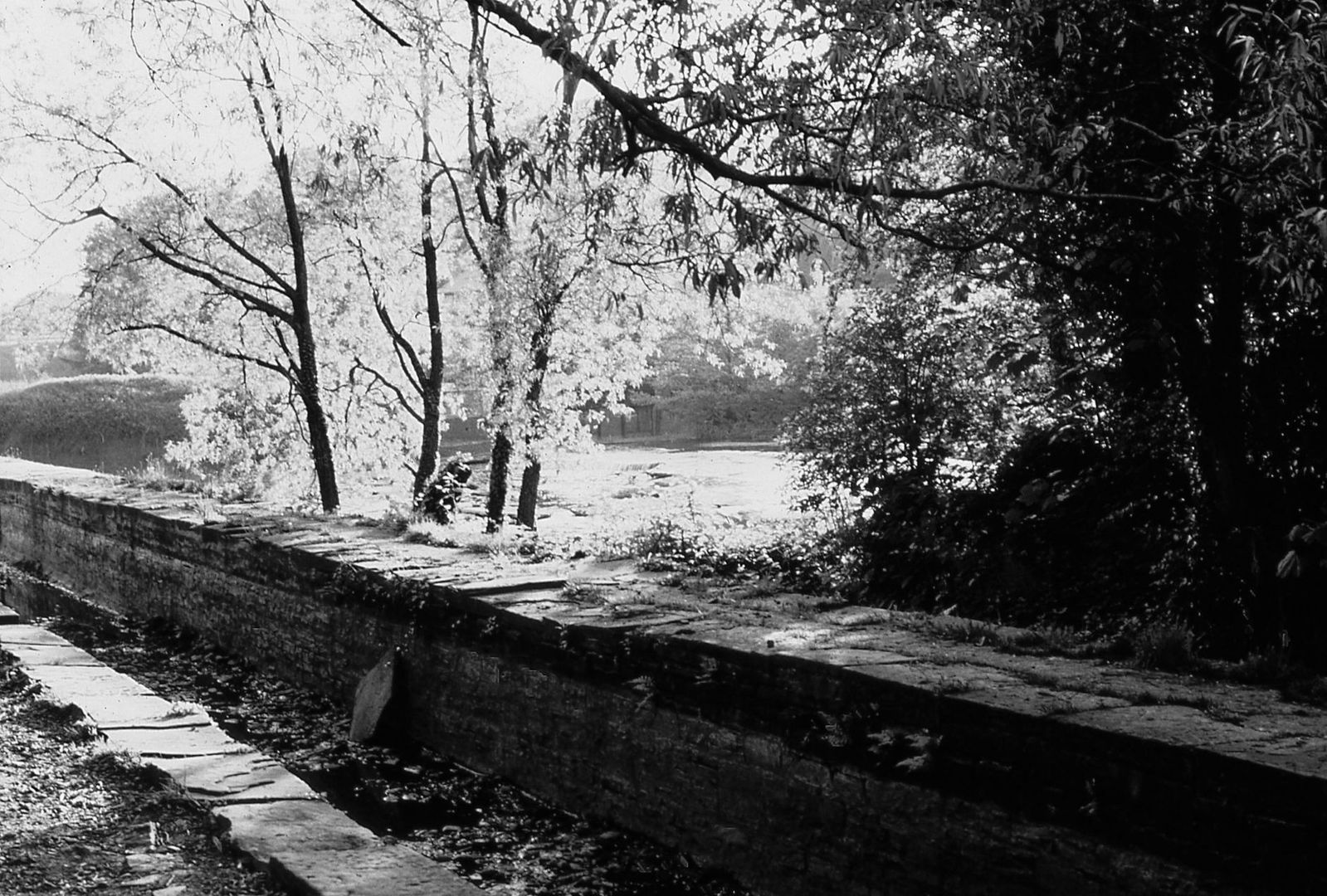
The solution was audacious because it accepted that no single form of transport could manage the entire journey. Canal boats would carry freight along the lower section, while railway wagons would take over where the hills defeated navigation. The resulting Cromford and High Peak Railway eventually formed a 33-mile route between the Cromford Canal and the Peak Forest Canal, using inclined sections to connect different elevations.
- Water transport provided efficient movement along the lower, comparatively level canal corridor.
- Inclined railways carried wagons over the steepest changes in height.
- Stationary engines supplied the pulling force where early locomotives were unsuitable.
- Transfer points allowed goods to move between barges and railway wagons rather than forcing one system to cope with every landscape.
This arrangement reveals the practical intelligence behind the project. Instead of trying to flatten the Peak District or force a canal through impossible country, engineers divided the problem into manageable stages. Cromford Wharf therefore represents the opening chapter of a transport system built around adaptation.
How Stationary Steam Conquered Impossible Gradients
Early steam locomotives were not a straightforward answer to the High Peak”s inclines. Locomotives of the period were heavy, mechanically developing machines that depended on adhesion between iron wheels and rails. On a steep gradient, the wheels could slip, especially when hauling loaded wagons. The track itself also had to withstand the concentrated weight and pulling forces of a locomotive. For a railway facing gradients as severe as 1 in 8, engineers needed a more controlled method.
Stationary winding engines provided that control. A powerful beam engine remained fixed beside an inclined railway and wound an iron chain or substantial rope around a drum. Wagons were attached to the line, and the engine hauled them up or lowered them down at a managed speed. The system did not ask a locomotive to generate traction on the incline. Instead, it transferred the difficult work to a permanent machine designed specifically for lifting loads.
That arrangement produced a very different industrial experience from a later locomotive railway. There was no engine travelling continuously along every section of track. Instead, the route was divided into working zones, with stationary engines, ropes, chains and gravity cooperating across the landscape. The atmosphere around such machinery would have been dominated by the rhythmic movement of beams, the tension of hauling gear, escaping steam and the heavy clatter of wagons. Modern visitors can gain a sense of the raw physical environment of steam railways through sites such as Steamtown National Historic Site, where heat, steam, oil, whistles, drive rods and vibrating ground are central to the interpretation.
Stationary steam also made economic sense. A fixed engine could be positioned where the gradient demanded maximum power, while locomotives were reserved for flatter stretches where they performed more efficiently. The arrangement was complex, but it allowed freight to cross terrain that would otherwise have required expensive roads, canals or animal haulage.
Middleton Top and the World’s Oldest Surviving Winding Engine
Middleton Top is one of the most significant surviving sites on the High Peak Trail. The winding engine installed there was built by the Butterley Company in 1829 and worked an incline with an unforgiving gradient of 1 in 8. That figure deserves attention: for every eight units travelled horizontally, the track rose or fell by one unit. For a loaded freight railway in the early nineteenth century, this was an extraordinary challenge, and the engine”s task was to haul wagons up through the steep cutting using its heavy winding gear.
The Middleton Top engine is recognised as the world”s oldest surviving winding steam engine of its type and the sole survivor of the eight stationary engines originally constructed along the railway’s route. Its preservation gives the trail an unusually direct connection with the technology that made the corridor possible. Rather than encountering only a dry trackbed or an informational sign, visitors to the site can witness the authentic masonry engine house and external wheel pit associated with the heavy work of lifting wagons over the limestone hills.
Steam power originally drove the winding drum through dedicated boilers until 1957, after which a vertical locomotive boiler supplied steam to keep the machinery turning until commercial winding operations on the Middleton Incline ceased in 1963. The wider railway route remained open for traffic for a few more years before closing entirely in 1967. When Derbyshire County Council took over the High Peak Trail during the 1970s, volunteers helped reinstate the beam engine for public demonstrations using compressed air, running regularly from the 1980s onwards to showcase the majestic motion of its beam and gearing.
A major historical milestone took place in May 2025 during the bicentenary of the 1825 Cromford and High Peak Railway Act. Over the May Bank Holiday weekend (3-5 May 2025), the engine successfully ran on live steam for the first time in decades during a one-off anniversary celebration, an event covered as Middleton Top engine to be powered by steam for first time in decades, powered by steam piped in from visiting Fowler ploughing engines to evoke the spirit of its final operational years. Following these bicentennial celebrations, Derbyshire County Council confirmed that the Middleton Top Engine House has been temporarily closed to the public for essential, unforeseen maintenance works, with repairs anticipated to keep the interior closed until 2027. Consequently, internal access to the historic machinery and live running demonstrations are suspended for the time being, though the striking stone building and its historic surroundings remain visible from the trail.
Key Milestones Along the High Peak Route
The route becomes easier to understand when its principal locations are viewed as parts of one integrated engineering system. Cromford Wharf supplied the canal connection, the inclines overcame the sharpest rises, Middleton Top preserved the winding technology, and the plateau carried the railway across high ground where a canal would have been impractical.
| Landmark | Engineering role | Gradient or characteristic |
|---|---|---|
| Cromford Wharf | Canal loading and interchange point | Lower-level water transport linked with industry |
| Sheep Pasture Incline | Inclined railway section using hauled wagons | Steep ascent requiring mechanical assistance |
| Middleton Top | Stationary winding engine and incline works | Approximately 1 in 8 gradient; commercial haulage ceased 1963 |
| Limestone plateau | High-level railway corridor | Rugged upland terrain beyond practical canal navigation |
Changing transport technology reshaped freight economics across Derbyshire. Canal boats could move bulky goods with relatively low rolling resistance, while railway wagons offered access to terrain that water could not reach. The transfer between the two systems involved handling and infrastructure, but it opened a far more useful corridor than either mode could have provided alone.
Later locomotive development gradually reduced the need for stationary winding engines, and commercial operations on Middleton Incline came to an end in 1963 before the line as a whole closed in 1967. Its legacy, however, is not limited to obsolete machinery. The corridor shows how industrial transport evolved in response to geography, with each generation of technology solving a different part of the same movement problem.
Practical Tips for Exploring the High Peak Trail Today
The High Peak Trail is best approached as both a countryside route and an outdoor museum without walls. Middleton Top remains a natural focal point for an excursion because the site marks the crest of the historic incline and offers visitor parking and direct access to the High Peak Trail. While the countryside centre grounds, car park, and outdoor paths remain accessible, visitors should plan ahead: the council-run cycle hire centre at Middleton Top is temporarily closed while assessments are undertaken, meaning cyclists must bring their own bicycles. In addition, the Engine House itself is closed for essential maintenance until 2027, meaning internal engine viewing and demonstrations are not currently available.
Another rewarding approach begins at Cromford Wharf. The former canal towpath provides a gentler introduction to the industrial landscape, with the waterway, Cromford Mill and nearby heritage features helping visitors understand how the railway connected with canal transport. The canal route includes historic features such as tunnels, aqueducts, reservoirs and industrial works, although later roads, farmland and development mean that the full former canal line does not always function as one uninterrupted walking route.
- Plan the starting point. Choose Cromford Wharf for canal history and a lower-level walk, or Middleton Top for direct access to the High Peak Trail and panoramic views across the incline.
- Check facility status in advance. Confirm parking arrangements and bring your own bicycle if cycling, as the on-site cycle hire centre at Middleton Top is temporarily closed. Keep in mind that the Engine House is closed for conservation repairs until 2027.
- Allow extra time for interpretation. The machinery housings, cutting walls, track gradients and surviving trackbeds are easier to appreciate when the route is treated as a sequence of engineering sites rather than simply a long-distance path.
- Prepare for upland conditions. Weather can change quickly on exposed limestone country, so carry waterproof clothing, water and suitable footwear even when the forecast looks settled.
- Expect uneven surfaces. Compacted gravel sections, steep inclines and variable ground can be tiring for walkers and cyclists. A measured pace is useful, particularly near steep or exposed parts of the former railway incline.
For a longer outing, walkers can combine sections of the canal towpath with the high trail, but route planning is essential because the historic canal corridor includes places where the original alignment has been interrupted or access requires a detour. A map, current local access information and realistic distance planning will make the day more enjoyable.
The route also rewards repeat visits. In bright weather, the limestone landscape reveals its open scale, while mist and low cloud can make the old inclines feel particularly atmospheric. Whatever the conditions, the combination of industrial remains and quiet countryside makes the trail suitable for both dedicated railway enthusiasts and visitors who simply want a distinctive Peak District walk.
Step Back in Time Along Derbyshire’s Living Heritage Corridor
The story of Cromford Wharf and the High Peak Trail is a reminder that industrial progress was often an exercise in compromise. Canals offered efficient freight movement but stopped where the hills became too severe. Locomotives promised flexibility but could not initially manage the steepest gradients. Stationary steam engines filled the gap, using chains, ropes and carefully engineered inclines to lift wagons across the Peak District.
That former freight corridor now offers a rare combination of tranquillity and technical drama. A walk beside the canal or across the high trail can reveal limestone scenery, quiet towpaths and open moorland, while the surviving structures explain how loudly and mechanically this landscape once worked. Bring suitable clothing, allow time to explore Middleton Top and Cromford Wharf, and check current visitor arrangements before setting out. The result is more than a scenic day outdoors: it is a direct encounter with the engineering decisions that helped reshape British transport.

