
Welcome the Chill with Confidence and an Open Bonnet
There is a particular moment in the British year when the car park feels darker, the windscreen is wet before breakfast, and the first journey of the day begins with a careful scrape of ice. Autumn roads bring fallen leaves, standing water, low sunlight and heavier traffic, while winter adds frost, sleet and longer periods of darkness. None of this is a reason to dread the commute, but it is a good reason to give the car a little attention before the weather becomes genuinely demanding.
A short preventive check is far more comfortable than waiting beside a stranded car in freezing rain for breakdown recovery. The bonnet can seem like a territory reserved for mechanics, yet five straightforward checks take less than fifteen minutes and require very little technical knowledge. A battery inspection, a tyre check, a look at the wipers, a coolant check and a screenwash top-up can become a simple weekend ritual, helping protect both the vehicle and the journeys that matter, from the daily school run to a long drive across the country.
Testing Battery Health Before Cold Mornings Bite
Cold weather makes starting harder because a battery becomes less chemically efficient as temperatures fall. At the same time, the car demands more electrical power. Heated screens, cabin blowers, lights, heated seats and demisters may all be working during the first few minutes of a dark morning. A battery that seems adequate in mild weather can therefore reveal its weakness as soon as the temperature drops.
With the engine switched off, open the bonnet and look at the battery casing and its connections. White or blue-green powder around a terminal clamp suggests corrosion, while a loose connection can interrupt the flow of electrical power. Do not handle damaged components casually, and never work near the battery with cigarettes, naked flames or anything that could create a spark. If the battery is swollen, cracked or leaking, arrange professional assistance rather than attempting a home repair.
Pay attention to the car”s behaviour. A starter motor that turns more slowly than usual, dim interior lights, hesitant electric windows or repeated clicking can all point towards a weak battery, although charging-system faults can produce similar symptoms. Many batteries last roughly three to five years, but repeated short journeys, electrical drain and extreme temperatures can shorten that period. Cars that sit unused for long spells may benefit from a suitable trickle charger or battery conditioner. A smart charger can offset normal self-discharge, but compatibility with the battery type and the manufacturer”s instructions must be checked first. Charging should take place in a dry, well-ventilated area.
- Switch off lights, heaters and accessories before attempting to start the engine.
- Do not repeatedly attempt a failing start, as this can flatten the battery further.
- Use only a charger designed for the vehicle”s battery type, such as AGM, EFB or SLI where applicable.
- Keep children secured away from the open bonnet, moving traffic and electrical equipment. Guidance on suitable Child Safety Seats underlines the importance of using an appropriate restraint before every journey, including short trips.
A conditioner may take considerably longer to restore capacity, while a trickle charger can require many hours to recharge a depleted battery. These devices are useful for second cars, classic cars and vehicles used only occasionally, but they are not a substitute for diagnosing a battery that repeatedly goes flat. Persistent problems may involve the alternator or another electrical fault.
The 20p Tyre Tread and Pressure Routine
Tyres are the car”s contact with the road, and their role becomes especially important when autumn rain leaves a motorway or rural lane covered in water. Tread grooves channel water away from the contact patch, allowing rubber to maintain contact with the road surface. As tread wears down, the tyre has less capacity to disperse water, increasing the risk of aquaplaning, skidding and longer stopping distances.
UK law requires cars to have at least 1.6mm of tread across the central three-quarters of each tyre and around the tyre”s complete circumference. That is the legal minimum, not necessarily the point at which wet-weather performance feels reassuring. Tyre and safety specialists commonly advise replacing tyres at around 3mm, particularly for drivers who regularly face heavy rain, fast roads or long winter journeys.
The familiar 20p test is a useful screening method. Insert a 20p coin into several grooves around the tyre. If the outer band of the coin is hidden, the tread is likely above the legal minimum. If the outer band remains clearly visible, have the tyre checked promptly with a proper tread-depth gauge or by a tyre professional. Inspect the inner and outer edges as well as the centre, because uneven wear can be missed when looking only at the most visible part of the tread.
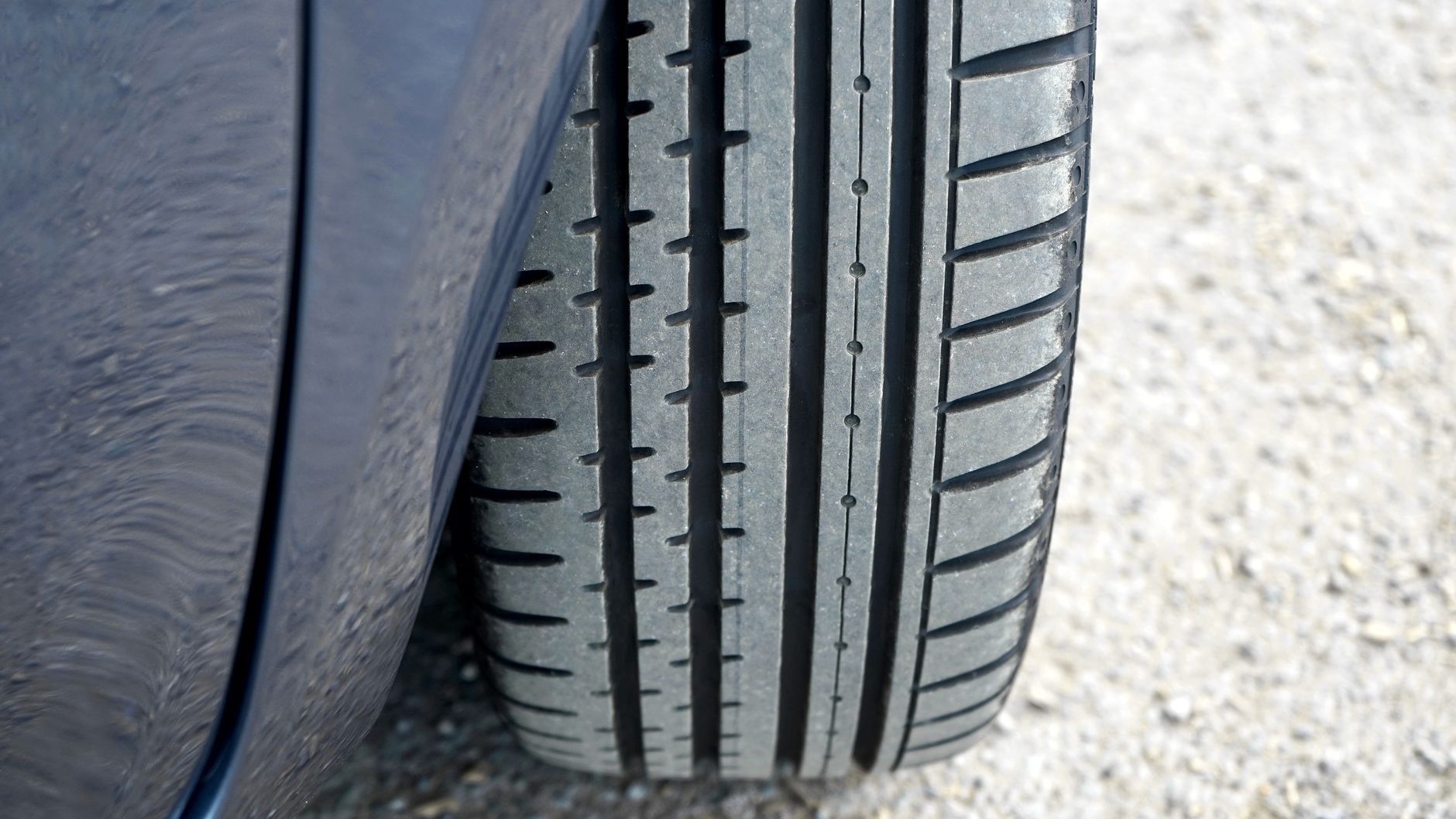
- Check each tyre for cuts, cracks, bulges, nails and areas of unusual wear.
- Repeat the 20p test at several points around the full circumference of every tyre, including the spare if fitted.
- Find the manufacturer”s recommended pressures on the placard inside the driver”s door frame, fuel flap or handbook.
- Measure pressures when the tyres are cold, then adjust them to the specified figures rather than relying on a general setting.
- Arrange professional inspection if a tyre loses pressure repeatedly, vibrates, pulls the car to one side or shows damage.
Correct pressure supports handling, braking and fuel efficiency, but the right figure depends on the car and its load. Some vehicles specify different pressures for normal driving and a fully loaded boot. Check the guidance before a long winter journey, and remember that a tyre can look inflated while still being significantly below the recommended pressure.
Seeing Clearly Through Grime and Driving Sleet
Autumn driving creates a demanding combination of road grit, muddy spray, fallen leaves, low sunlight and frequent rain. Windscreen wiper rubber is exposed to heat, cold, ultraviolet light, dirt and ice, so it gradually loses its flexibility. Blades commonly last around six to twelve months, although usage, parking conditions and the quality of the blade can make that period shorter or longer.
Turn the wipers on with plenty of washer fluid and watch the result. Juddering, squeaking, skipping, streaking and smear patches are all warning signs. A blade may be leaving a dirty film that becomes particularly dangerous when headlights approach at night or when low sunlight hits the windscreen at an angle. Smearing can also be caused by a dirty screen or poor-quality fluid, so clean the glass before assuming replacement is necessary.
Lift the blades gently and inspect the rubber edge. A soft cloth with warm water can remove grit, while a small amount of methylated spirit may help lift stubborn contamination. Never force a blade across frozen glass, since the rubber can tear and the wiper mechanism can be strained. Clear ice with a proper scraper and use de-icer where appropriate. If visibility remains poor after cleaning, replacement is a modest expense compared with the safety benefit.
- Top up screenwash before a wet or frosty spell, rather than waiting until the warning light appears.
- Remove leaves and grit from the bottom of the windscreen so they do not damage the blades.
- Use wipers only on wet glass, not as an ice scraper.
- Check that front and rear washers spray evenly and that the wipers clear the driver”s main field of vision.
Roadworthiness systems in different countries place emphasis on intact windscreens, wipers and visibility equipment because clear vision is fundamental to safe driving. The inspection information published by the Missouri State Highway Patrol is one example of how authorities use vehicle safety checks to support road users. UK drivers should still follow UK requirements and the vehicle”s own handbook, but the practical lesson is universal: if the windscreen cannot be cleared reliably, the car is not ready for difficult weather.
Mastering Antifreeze and Coolant Ratios
Coolant does more than carry heat away from the engine. A correctly formulated mixture helps protect against freezing, boiling and corrosion, and it supports the water pump and cooling system. Plain water may cool an engine in mild conditions, but it offers inadequate frost protection. If it freezes, it expands, potentially cracking a radiator, splitting hoses or damaging the engine block.
With the engine completely cold and the car parked on level ground, locate the translucent expansion tank under the bonnet. The fluid should sit between the MIN and MAX marks. Never remove a coolant cap while the engine is hot, because pressurised liquid can cause serious burns. Check the handbook before topping up, since coolant colours are not a reliable guide to compatibility and different vehicles require different formulations.
| Mixture | Practical use | Important caution |
|---|---|---|
| Premixed coolant | Convenient protection for the specified temperature range | Use the product approved for the vehicle |
| Common 50/50 coolant and water mix | Often suitable for general winter protection | Confirm the manufacturer”s required ratio |
| Concentrated coolant | Must be diluted as directed on the container | Do not assume more concentrate always gives better protection |
A coolant level that repeatedly falls indicates a leak or another fault, not simply a need for regular topping up. Damp patches, a sweet smell, overheating, steam or a temperature warning light should be treated seriously. Stop safely and seek assistance rather than continuing until the engine is damaged.
Upgrading Your Screenwash for Sub-Zero Driving
Summer screenwash is designed to remove insects and general dirt, but it may contain little or no frost protection. At motorway speed, a thin film of weak fluid can freeze rapidly on a chilled windscreen, turning an attempt to improve visibility into an opaque sheet. A frozen washer system can also damage the pump, split tubing or block the jets beneath the bonnet.
Before the first severe frost, drain or use up unsuitable summer fluid where practical and refill with a winter-grade product rated to at least -10C, or lower if the vehicle regularly travels through exposed areas. Follow the label carefully, because some concentrated products must be diluted while others are ready to use. Do not substitute household washing-up liquid, which can create foam and may not provide the required frost protection.
- Park on level ground and switch off the engine before opening the washer-fluid reservoir.
- Fill only to the marked level, leaving room for expansion where the handbook advises it.
- Test both front and rear washer jets after topping up.
- Clear a blocked nozzle carefully with a fine pin, without forcing it deeply or damaging its direction.
- If the pump makes a noise but no fluid emerges, stop operating it repeatedly and investigate for frozen fluid or a split pipe.
Good screenwash is particularly valuable when road salt and spray build up quickly. It also reduces the temptation to drive with a dirty windscreen, a small issue that can become a major hazard when glare, darkness and oncoming headlights arrive together.
Hit the Road with Total Winter Preparedness
These five checks turn seasonal car care into a manageable habit rather than an emergency project. Spend a few minutes on the battery, inspect tyre tread and pressure, test the wipers, verify the coolant level and replace weak screenwash with a winter-grade alternative. None requires specialist knowledge, yet each addresses a common source of winter inconvenience or danger.
- Battery connections and starting performance
- Tyre condition, tread and cold pressures
- Wiper rubber, washer operation and windscreen cleanliness
- Coolant level and manufacturer-approved antifreeze mixture
- Winter-rated screenwash and clear washer jets
It is also sensible to keep a small winter kit in the boot. A torch, phone charger, warm clothing, blankets, an ice scraper, de-icer, first-aid supplies and a warning triangle can make an unexpected delay much more manageable. Check the spare wheel or inflation kit as well, and keep breakdown-cover details accessible.
Choose a dry weekend morning, allow ten minutes, and open the bonnet before the first serious cold snap. A modest inspection now can prevent a frustrating roadside stop later, leaving the car better prepared for dark commutes, wet motorways and the quiet pleasures of a crisp winter journey.

