
Navigating the Cold and Damp Reality of British Winters
British winter driving rarely resembles an Alpine expedition. More often, the scene is familiar: persistent drizzle on the windscreen, greasy tarmac beneath streetlights, damp leaves around a rural bend and the occasional cold snap that turns standing water into black ice. Temperatures can change quickly between a mild coastal morning and a freezing inland evening, making tyre choice an important part of everyday vehicle preparation.
That mixed climate creates a practical dilemma. Dedicated winter tyres offer impressive performance in severe cold, ice and deep snow, while modern all-season tyres are designed to handle a broader range of conditions without requiring a seasonal wheel change. For many drivers, particularly those covering urban commutes, motorways and ordinary rural roads, all-season tyres provide the most sensible balance of grip, convenience and cost. Dedicated winter tyres still have a valuable role, but mainly where harsh conditions are frequent and predictable.
The Crucial 7 Degree Threshold and Why Rubber Compounds Matter
The often-quoted 7°C threshold is not a magical point at which every summer tyre suddenly becomes unsafe. It is a useful rule of thumb describing how rubber compounds generally behave as temperatures fall. Standard summer compounds are optimised for warmer conditions. As the air and road surface become colder, that rubber becomes less flexible, which can reduce the tyre’s ability to conform to small imperfections in the asphalt.
Winter and all-season tyres use compounds designed to remain more supple in cool conditions. Silica-rich formulations, combined with carefully shaped tread blocks, help maintain contact with the road during freezing mornings and wet winter journeys. The benefit is not limited to snow. A tyre that remains flexible can provide more dependable braking and steering on cold, damp or merely chilly asphalt, even when the surface looks dry.
- Summer tyres are generally strongest in warm weather, with precise handling and effective dry braking at higher temperatures.
- Dedicated winter tyres use softer, cold-resistant compounds and dense siping for ice and snow.
- All-season tyres use a compromise compound and tread design intended to perform across cool, wet, dry and lightly snowy conditions.
- Tyre condition matters just as much as category, because worn tread and incorrect pressures can undermine any design advantage.
That is why a dry winter morning should not automatically be considered harmless for summer tyres. Cold rubber may offer less traction when braking or cornering, particularly on a lightly frosted surface. Drivers should also remember that stopping distances depend on speed, surface, temperature, tread depth, vehicle weight and traffic conditions. The legal minimum tread depth for cars in the UK is 1.6mm across the central three-quarters of the tyre and around its full circumference, but safety organisations commonly advise replacing tyres at around 3mm because wet-weather performance can deteriorate below that point.
Wet Grip Versus Deep Snow Prowess Across Varied Climates
For most UK journeys, wet grip is more relevant than deep-snow performance. Motorways and ring roads may be covered by standing water, spray and surface slush rather than several centimetres of settled snow. A good all-season tyre uses grooves to channel water away from the contact patch, helping reduce the risk of aquaplaning. Directional tread patterns can support water evacuation, while numerous sipes create additional biting edges for cold surfaces and light snow.
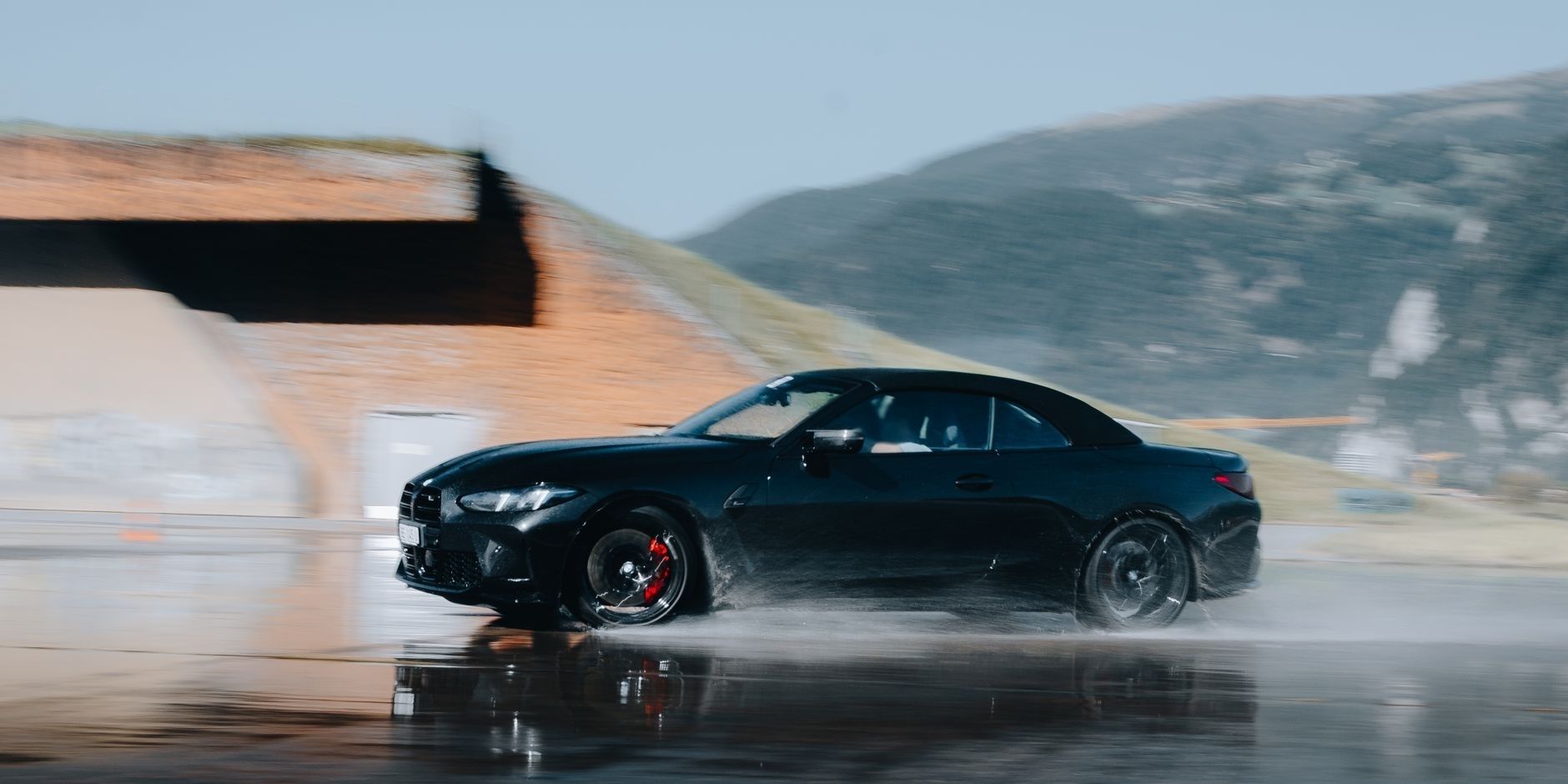
Dedicated winter tyres go further when conditions become genuinely severe. Their softer compounds stay pliable at lower temperatures, and their larger number of fine sipes can grip packed snow and ice more effectively. However, the same softer construction may wear more quickly during milder spells, and it is not automatically the best choice for a wet motorway at moderate winter temperatures. All-season tyres are designed to sit between the two extremes, offering useful snow capability without abandoning wet-road usability.
The difference becomes particularly clear when comparing Britain with countries that regularly face alpine conditions. Austria, for example, has defined winter-equipment requirements from 1 November to 15 April, with private cars and lighter goods vehicles generally needing winter tyres on all four wheels when roads are snowy, slushy, icy or otherwise wintry. Drivers should check the precise legal requirements before travelling, as penalties and liability can be serious. The Austrian winter tyre rules illustrate why a dedicated winter setup can be essential for mountain travel, whereas the UK’s more variable climate allows drivers greater flexibility.
- Wet motorway driving: Prioritise water displacement, stable braking and a strong wet-grip rating.
- Occasional light snow: Look for an all-season tyre with recognised winter markings and a tread designed for snow traction.
- Frequent ice and deep snow: Dedicated winter tyres normally provide the stronger option, especially when fitted to all four wheels.
- Mixed annual mileage: Consider whether the extra snow performance will be used often enough to justify a second set of wheels.
Whatever tyre is fitted, the road surface remains decisive. Wet roads can at least double stopping distances, and ice or snow can increase them dramatically. Drivers should slow smoothly, avoid abrupt steering or braking and leave much more space than usual. The official Highway Code guidance on adverse weather is a useful reference because it covers rain, ice, snow, reduced visibility and rapidly changing road conditions rather than treating tyre choice as a substitute for careful driving.
Evaluating Wheel Swaps Storage Hassles and Seasonal Costs
A dedicated winter setup involves more than buying four tyres. Many owners purchase a second set of wheels so that the seasonal change does not require removing and refitting tyres on the same rims. That can make future changes quicker, but the initial outlay may include wheels, compatible sensors, valves and fitting. A driver using separate wheel sets must also budget for seasonal inspection, torque checks and, where necessary, balancing.
There is a practical side to the calculation as well. Storing four bulky wheels can be difficult in a flat, terrace house or small garage. A tyre hotel may charge a monthly or seasonal fee, while independent garages quote widely for wheel changes and balancing. Some drivers report relatively modest fitting charges, whereas others encounter substantially higher prices for heavier vehicles or services that include cleaning, inspection and storage. A home change may save money, but lifting heavy wheels safely, using suitable axle stands and applying the correct torque is not a trivial task.
- Second wheel set: Higher initial cost, but simpler seasonal fitting once purchased.
- Professional storage: Convenient for households without suitable garage space, but adds a recurring charge.
- Balancing and inspections: Useful when wheels are refitted, especially if vibration, uneven wear or steering changes are noticed.
- One all-season set: Avoids twice-yearly changes, storage fees and the need to purchase additional wheels.
Running one set year-round does not make tyre wear disappear. All-season tyres can wear faster than a summer tyre during hot weather or faster than a winter tyre in sustained severe cold, depending on the design and driving style. They may also have a small fuel-efficiency compromise compared with a highly specialised summer tyre. In the UK, however, the milder winter climate means that avoiding duplicate equipment can outweigh those differences for many drivers, particularly when annual mileage is moderate.
Matching Your Tyre Choice to UK Driving Realities
The best choice depends less on the word printed on the sidewall and more on where, when and how the vehicle is used. A city commuter travelling on treated roads may encounter rain, cold asphalt, traffic queues and occasional slush, but rarely faces an unploughed mountain lane. An all-season tyre with strong wet-weather credentials is often well suited to that pattern. It also removes the inconvenience of arranging a seasonal appointment just as temperatures begin to fall.
Rural drivers need to consider elevation and road treatment. Someone living on an exposed Scottish route, in the Pennines or along an isolated Yorkshire lane may meet untreated ice and compacted snow more often than a driver in central London or a coastal town. In those circumstances, dedicated winter tyres can provide worthwhile additional security, particularly if the car must be used early in the morning when roads have not thawed. Drivers who regularly travel to ski resorts or across continental mountain regions should also examine the laws of every country on the route.
| Criterion | All-season tyres | Dedicated winter tyres |
|---|---|---|
| Wet braking in typical UK winter conditions | Generally strong when a quality, correctly inflated tyre is chosen | Can be effective, but designed with greater emphasis on cold-weather traction |
| Occasional light snow | Usually capable, especially with recognised winter markings | Very capable, with more specialised siping and compounds |
| Deep snow and ice | Limited compared with a true winter tyre | Normally the stronger choice |
| Seasonal cost | One set, no routine wheel swap or storage requirement | Requires extra tyres or wheels, fitting and storage arrangements |
| Convenience | High for mixed British conditions | Lower unless severe winter conditions are frequent |
Whichever option is selected, safe driving habits remain essential. The Highway Code advises increasing following distances on wet roads and taking particular care on icy or snowy surfaces, where stopping distances can become many times longer than on dry roads. Clear snow and ice from windows, lights, mirrors and number plates before moving off, and avoid sudden acceleration, braking or steering. Check forecasts and route conditions before an essential journey, and carry suitable emergency equipment when severe weather is expected.
Tyre maintenance deserves regular attention. Check pressures when the tyres are cold and follow the vehicle manufacturer’s recommended settings, which may differ between normal and heavily loaded driving. Inspect for cuts, bulges and uneven wear, and use the 20p test or a tread-depth gauge as a quick check. A tyre approaching the legal limit is not a sensible choice for a wet winter, even if it has passed a previous inspection. Correct pressures and healthy tread help the tyre perform as its engineers intended.
Make the Smart Investment for Confident Winter Miles
For the majority of UK drivers, modern all-season tyres occupy the practical sweet spot. They are suited to cool, wet roads, occasional frost and modest snowfall, while avoiding the cost and inconvenience of maintaining two complete wheel sets. Their value is especially clear for drivers whose winter routine consists of commuting on treated roads, motorway travel and mixed urban journeys rather than regular trips through deep snow.
Dedicated winter tyres remain a sound investment where the conditions justify them. Remote rural motorists, people who must travel before roads are treated, and frequent visitors to Alpine regions may benefit from the extra grip available in deep snow and on ice. The decision should be based on geography, timing and necessity rather than on the assumption that one category is universally superior.
- Inspect current tyres for tread depth, damage, uneven wear and age-related deterioration.
- Choose a reputable all-season or winter model with performance suited to wet roads and the conditions most often encountered.
- Maintain the recommended pressures, check them regularly and adjust them when carrying heavier loads.
- Allow longer braking gaps, reduce speed smoothly and postpone non-essential journeys during severe ice or snow.
Good winter preparation is ultimately a combination of suitable rubber, sensible maintenance and calm decision-making. For most British roads in 2026, a quality all-season tyre offers dependable versatility without unnecessary seasonal complexity. Where the landscape and weather demand more, a dedicated winter set still has a clear and valuable place.

