
The Living Drama of Heritage Steam Railways
A preserved steam railway offers far more than a moving subject. The hiss of escaping steam, the hard rhythm of connecting rods, the smell of coal smoke and hot oil, and the gradual gathering of passengers create a scene with sound, movement and atmosphere. A successful photograph needs to communicate some of that experience, turning an operating locomotive into a visual story about engineering, landscape and living industrial heritage.
That is why ordinary landscape settings often fall short. A steam plume can change shape in seconds, from a transparent veil to a bright white mass that dominates the frame. The locomotive may move from deep shadow into harsh sunlight while dark boiler paint sits beneath a pale sky. Fast shutter speeds, careful metering and quick decisions are essential, but the camera must never take priority over railway rules. The most compelling image is still the one made from a safe, authorised position.
Lineside Safety and the Heritage Railway Culture
Heritage railways are working transport environments, even when their trains operate for leisure rather than daily commuting. Fences, gates, platform yellow lines and staff instructions define where visitors may stand. Crossing a boundary for a clearer angle can place a photographer in the path of a locomotive, in a driver”s blind spot or near equipment that may move without warning. Trespass laws and railway bylaws vary by jurisdiction and operator, but the practical rule is consistent: remain on public paths and visitor areas unless explicit permission has been given.
The people running a preserved railway are often volunteers, but their responsibilities are serious. Footplate crews, signalmen, guards, station masters and platform staff are constantly judging whether passengers are behaving predictably. A photographer who keeps equipment compact, avoids sudden movement and responds immediately to instructions is far easier to work around than somebody absorbed in a viewfinder. Ask before entering any staff-only area, and accept a refusal without argument. Restricted access may relate to signalling, traction, hot machinery or the safe movement of passengers.
Weather can also change the operating picture. Dry grass, wind and accumulated embers create a particular concern when steam locomotives are working hard. Operators may use spark arresters, damper screens, ash-pan checks and water sprays, while also monitoring heat, vegetation and wind direction. Some services may be altered, suspended or replaced by diesel traction when conditions deteriorate. The BBC”s account of lineside fire risks explains why such decisions involve continuous assessment rather than a simple seasonal rule.
- Stand behind barriers and observe platform yellow lines at all times.
- Keep camera straps, tripods and bags clear of walkways, doorways and staff working areas.
- Never cross the track, climb a fence or lean beyond a platform edge for a composition.
- Be prepared for a change of plan if fire risk, wind or operating conditions affect the service.
Exposure Craft for Steam and British Skies
Steam is visually bright but not necessarily easy to expose. A white plume can lose all texture if the highlights are clipped, while the locomotive”s boiler and running gear may become almost black beneath a bright overcast sky. RAW capture gives useful recovery latitude, but it cannot restore detail that has been completely overexposed. A practical starting point is to expose for the brightest part of the plume, then check the histogram and highlight warning rather than relying only on the appearance of the rear screen.
Shutter speed should follow the visual intention. Around 1/1000 second or faster is a useful baseline for freezing a locomotive approaching at speed, particularly when the aim is to show sharp valve gear, wheel spokes or flying spray. Around 1/500 second can still preserve considerable mechanical detail in many situations. For a deliberate sense of movement, try approximately 1/60 to 1/125 second and pan smoothly with the engine, although the correct setting depends on distance, focal length and speed. Side rods often look more dynamic with a small amount of motion blur, while the cab or smokebox remains recognisable.
Continuous autofocus with an appropriate tracking area can help with a moving train, but it should be paired with disciplined composition. Matrix or evaluative metering is convenient when the scene changes rapidly, while centre-weighted or spot metering can be useful when the locomotive occupies a predictable part of the frame. Exposure compensation may be necessary when a dark engine against a pale sky causes the camera to overexpose the subject. A graduated neutral-density filter can balance sky and train in a stationary composition, while a polariser may reduce reflections, though it can also cost light and make fast shutter speeds harder to achieve.
| Photographic aim | Useful starting point | What to watch |
|---|---|---|
| Freeze the locomotive | Approximately 1/1000 second or faster | Raise ISO when necessary and protect steam highlights |
| Show sharp detail with some movement | Approximately 1/500 second | Check connecting rods and moving wheels at different distances |
| Create a panning effect | Approximately 1/60 to 1/125 second | Follow the train smoothly and keep the background uncluttered |
| Photograph a waiting engine | Low ISO and a considered aperture | Wait for a plume, visible firebox glow or useful crew activity |
Composition matters as much as exposure. A 24mm lens can place the locomotive in its landscape and emphasise a dramatic plume, while a focal length around 70mm can compress the engine, smoke and background into a denser graphic arrangement. If a stationary locomotive is not steaming, patience may be more valuable than changing position repeatedly. A prepared frame can be transformed by one brief cloud, a lifted shovel of coal or a shaft of light across the boiler. In RAW processing, modest adjustments to exposure, clarity, white balance and vibrance can reveal steam texture without making it appear artificial.
Platform Dynamics and Human Elements
Stations provide some of the richest opportunities because they combine machinery with people and architecture. Departures, arrivals and water-tower fills bring natural activity, but they also require restraint. Stand where passengers are not being funnelled through, keep clear of locomotive access points and avoid positioning yourself between a crew member and a signal, hose or coupling. A long lens can provide intimate details without requiring physical proximity, while a smaller camera setup makes it easier to move when staff need the space.
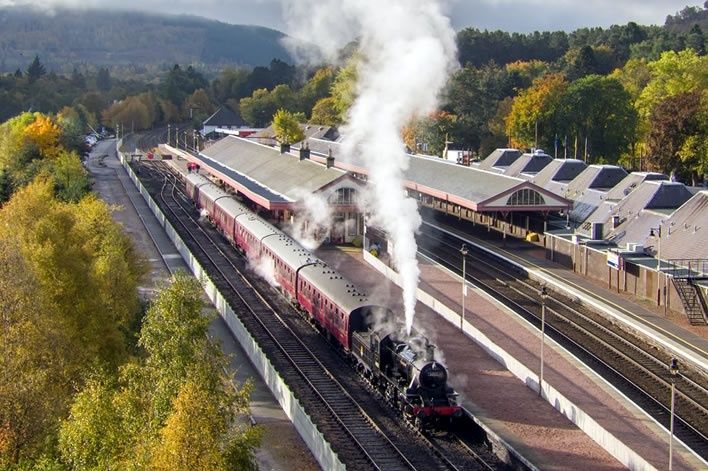
Human elements often give a steam photograph its emotional centre. A driver looking from the cab, a fireman working in the doorway, a station master checking the platform or passengers watching a plume rise above the carriages can establish scale and period atmosphere. Candid images should remain respectful, particularly when staff are concentrating on safety-critical work. Ask permission for posed portraits or close access, and never distract a crew member while the train is moving or being prepared.
Daily rover tickets can be particularly useful for photographers because they allow repeated journeys and visits to different stations. The North Norfolk Railway”s visitor information explains how All Day Rover tickets can support travel between Sheringham, Weybourne and Holt on operating days, while its calendar and timetable should be checked before travelling. Repeated passes let you observe where shadows fall, how a platform fills before departure and when crews are most visible. Demonstration events can have different conditions: at the Dockyard”s 2026 Railway Operating Days, the surviving tramway section is for demonstration and does not carry passengers, with operating times not guaranteed.
- Arrive early enough to understand the platform layout before the busiest period.
- Choose a position that leaves a clear route for passengers, guards and footplate crews.
- Use repeated journeys to compare light, background and plume direction.
- Check the operator”s calendar, timetable and event notes because services can change.
Scouting Dramatic Lineside Vantage Points
The best viewpoint is not automatically the most dramatic-looking place on a map. It must also be legal, stable and safe. Public rights of way, footbridges and designated viewpoints can provide height and separation from the railway, allowing the train to be framed against a cutting, valley or historic structure. Never assume that a historic trackbed is open access, and do not enter private land simply because a path appears to lead towards the line.
Country trails can be valuable scouting tools, especially where they follow former railway alignments or overlook preserved routes. The official information for the High Peak Trail walking route is a useful example of how designated countryside access can reveal elevated perspectives without placing visitors on the operational railway. Check the route”s current conditions, gates and access guidance, and allow enough time to reach a viewpoint without rushing beside the line.
- Study maps and operator guidance before setting out, identifying only public or authorised viewpoints.
- Visit the location without the camera first, checking sightlines, light direction, escape routes and ground conditions.
- Read the railway”s gradient and curves, then choose a framing position that shows both the engine and its surroundings.
- Confirm the day”s service pattern locally, while avoiding assumptions about exact timings or locomotive allocations.
Gradient is an important clue to locomotive behaviour. Engines working uphill may produce denser exhaust and more visible effort, especially when accelerating from a station or hauling a substantial train. A cutting can contain smoke and make the plume appear more concentrated, while an open embankment may reveal the exhaust against the sky. Wind direction is equally important. A crosswind can carry steam across the carriages, whereas a following wind may push the plume away from the engine. Watch a few movements before committing to a position, and remember that the heaviest exhaust is never worth entering a prohibited area to capture.
Backgrounds deserve the same attention as the locomotive. Modern signs, parked cars and overhead clutter can weaken a historic mood, while a signal box, stone wall, woodland edge or distant hillside can reinforce it. Look through the viewfinder at blurred shapes as well as details, since smoke can merge with trees or bright sky. A low viewpoint from an authorised public area may emphasise height and power, while an elevated path can show the whole train threading through the landscape. In both cases, leave room in front of the locomotive so the image suggests movement rather than confinement.
Pack Your Camera Bag and Respect the Rails
Dynamic steam photography rewards preparation, but it also rewards patience. The strongest images usually combine a well-chosen viewpoint, controlled highlights, an intentional shutter speed and a moment that could not be staged easily. Before pressing the shutter, check that the train, crew and passengers have enough space, that the camera position is permitted and that attention is not being diverted from a safety-critical operation.
Preserved railways depend on ticket income, volunteers, maintenance teams and considerate visitors. Buy the appropriate ticket, follow staff guidance, support station facilities where practical and speak politely when requesting access or information. A courteous photographer is more likely to be welcomed back, and the railway remains a functioning heritage attraction rather than merely a backdrop.
- Check the operator”s opening dates, timetable and event conditions before travelling.
- Pack spare batteries, formatted memory cards, weather protection and a lens cloth.
- Set a suitable shutter speed before the train arrives, then monitor highlights in the plume.
- Stay behind barriers and platform lines, and keep bags and tripods out of working areas.
- Be ready to move or stop photographing immediately when staff give instructions.
With those habits in place, technical skill and railway etiquette support each other. The result is not simply a sharp picture of a locomotive, but a responsible record of steam, landscape, people and the continuing work that keeps Britain”s railway heritage alive.

