
Slow Travel Reimagined Along the Bristol Channel
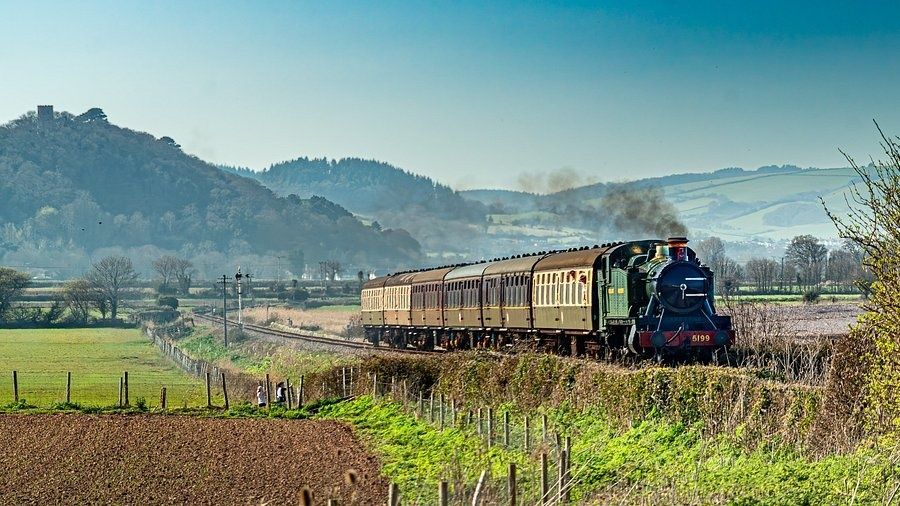
There is something especially appealing about leaving the motorway behind and allowing a steam locomotive to set the pace. Instead of measuring a Somerset day out by traffic queues and satnav instructions, passengers can settle into a restored carriage, listen to the beat of the engine and watch hedgerows, pasture and distant hills unfold through the window. The West Somerset Railway turns the journey itself into part of the holiday, making heritage transport useful as well as nostalgic.
Running for approximately 20 miles between Bishops Lydeard, near Taunton, and Minehead on the Bristol Channel coast, the railway is England”s longest standard-gauge heritage railway. Its route moves through rolling farmland, the ancient landscape of the Quantock Hills and a sequence of coastal communities before reaching Minehead. For walkers, families and railway enthusiasts, this creates an unusually flexible itinerary, with a vintage train providing the link between countryside trails, historic villages, harbour scenery and seaside promenades.
Essential Route Logistics and Practical Journey Planning
The West Somerset Railway has ten stations along its route, although the most rewarding way to use it is not necessarily to remain on board from end to end. A complete journey between Bishops Lydeard and Minehead generally takes around 75 to 85 minutes, depending on the service and operating pattern. That is long enough to appreciate the scenery, but short enough to combine the ride with a walk or attraction at either end.
Timetables are seasonal and vary according to the type of operating day. The railway calendar uses colours to distinguish standard services, special events and festive programmes, with red, blue, brown, orange and yellow days used for different timetable categories, purple for special events and green for Christmas services. Some days have no public trains, while event days may use a separate downloadable timetable. Before setting out, check the official railway calendar for the exact operating date, service type and any restrictions. A Day Rover normally offers the greatest flexibility for hopping on and off, while station-to-station tickets are useful for shorter outings. Fares, availability and booking arrangements should also be confirmed before travel.
| Planning point | What to know |
|---|---|
| Route | Bishops Lydeard to Minehead, approximately 20 miles |
| Stations | Ten stations across the heritage route |
| End-to-end journey | Approximately 75 to 85 minutes |
| Ticket choice | Day Rover for flexible travel or station-to-station tickets for shorter trips |
| Operating pattern | Seasonal standard, event and festive timetables |
| Access by car | Extensive free parking at Bishops Lydeard; council pay-and-display parking at Minehead |
Taunton is the nearest mainline gateway for many visitors, but the connection to Bishops Lydeard requires careful checking. The direct bus stop at the railway station was withdrawn on 31 August 2025 after many years, as reported in Bus link to West Somerset Railway withdrawn after 20 years, while services 28 and 28A continue to stop near the Lethbridge Arms. The remaining walk is more than 500 metres and involves an underpass beneath the A358, so passengers with luggage, mobility concerns or young children should allow extra time and check the route in advance. Local bus link changes are particularly relevant when connecting from a mainline train at Taunton. Bus services continue towards Bishops Lydeard, Watchet, Dunster and Minehead, but the current timetable should be checked before departure because routes and stop arrangements can change.
Exploring Britain”s Living Railway Heritage
The West Somerset Railway is more than a steam excursion laid over modern infrastructure. It preserves the atmosphere of a genuine country branch line associated with the former Great Western Railway. Stations, signal boxes, platforms and railway buildings help explain how rural communities were once connected to markets, ports and larger towns. At Bishops Lydeard, the Gauge Museum adds further context, while the line”s working railway environment allows visitors to see heritage engineering in operation rather than behind glass.
The experience is physical and sensory. Copper boilers catch the light, steam drifts across the platform and the sound of a locomotive working uphill gives the landscape a distinctive rhythm. Inside the carriages, polished fittings and traditional compartments provide a sharp contrast with modern rail travel. This fits into a wider national story: Britain has more than 150 heritage railways, and iconic British train journeys continue to connect engineering history with villages, countryside and outdoor exploration.
- Restored locomotives offer a close look at steam-era engineering.
- Signal boxes and station buildings show how railway staff controlled rural services.
- Historic carriages provide a slower, more sociable style of travel.
- Preserved branch-line scenery links industrial heritage with walking and tourism.
- Special events can add themed services, demonstrations and expanded displays.
Station Highlights from the Quantock Foothills to Watchet Harbour
Bishops Lydeard is a practical starting point for a full day, particularly for drivers, because it provides extensive free parking. It is also a useful place to begin understanding the railway before boarding. The surrounding countryside leads towards the Quantock Hills National Landscape, where walkers can find routes through wooded valleys, open ridges and farmland. Even if a long hike is not planned, the first section of the journey gives a strong sense of how the railway moves from the Taunton area into more open West Country scenery.
Further along the line, smaller stations offer a different pace from the main termini. Crowcombe Heathfield has a traditional rural character, while Stogumber provides an opportunity to explore a village setting. Watchet is especially attractive for visitors interested in maritime history. Its harbour, museums and tidal coastal atmosphere reflect the town”s long relationship with the sea, trade and local industry. The railway makes it possible to enjoy Watchet without committing to a full driving itinerary, although return trains must be checked carefully on the selected operating day.
- Begin at Bishops Lydeard. Allow time for the Gauge Museum, station atmosphere and the practicalities of parking or onward connections.
- Look towards the Quantock landscape. The railway provides access to countryside where a short walk can be combined with a scenic train ride.
- Pause at Crowcombe Heathfield or Stogumber. These countryside stations suit visitors looking for village wandering and a quieter break.
- Make time for Watchet. Explore the harbour area and local museums before continuing towards the coast.
- Check the return service. Heritage railways operate to specific seasonal timetables, so do not assume a frequent modern commuter-style service.
Stepping into Medieval Dunster and Seaside Minehead
Dunster station is one of the strongest choices for visitors who want history alongside railway heritage. From the station area, an excursion into the village can include Dunster Castle and the historic yarn market. The settlement”s medieval character is expressed through its streets, older buildings and traditional market heritage, creating a rewarding contrast with the industrial design of the railway. A visit here works particularly well as a half-day stop, with enough time for sightseeing before continuing by train.
Minehead, the western terminus, changes the mood again. The town offers a classic seaside setting with promenade walks, coastal views and access towards Exmoor. Blue Anchor beach provides another coastal option along the route, while Minehead is the most convenient base for visitors seeking a broader range of services. Walkers can use the town as a starting point for coastal exploration, but should consider the distance, weather and terrain before planning a longer Exmoor route. Coastal paths can be exposed, and a heritage train timetable may not provide the same flexibility as a local bus.
- For medieval history: choose Dunster and allow time for the castle, village streets and yarn market.
- For a traditional seaside outing: continue to Minehead for the promenade and coastal atmosphere.
- For beach scenery: consider Blue Anchor, subject to the day”s train service.
- For longer walking: use Minehead as a gateway towards Exmoor, with suitable footwear, weather protection and route planning.
- For refreshments: look for cafés, local tea rooms and dining venues within walking distance of the stations and town centres.
Food is an important part of making the day feel unhurried. Dunster and Minehead offer the best choice of cafés, tea rooms and places for a more considered meal, while smaller stops are better suited to a packed lunch or a simple refreshment break. Families should remember that station facilities and opening hours can vary outside the main season. Dogs are permitted on standard services for a fee, subject to restrictions, and bicycles may be carried when space allows, but both arrangements should be checked before travel.
Step Aboard Your Somerset Adventure Today
The West Somerset Railway works particularly well because it combines several kinds of day out without requiring a complicated transport plan. A single journey can include steam locomotives, preserved railway buildings, Quantock countryside, a medieval market town, a harbour and a seaside promenade. The train is not merely an attraction at the centre of the itinerary; it is the practical thread connecting very different parts of Somerset.
Advance planning matters most during school holidays, popular summer weekends and special event days such as steam spectaculars, diesel festivals and festive services. Check the railway”s current calendar, confirm the timetable colour and review parking, accessibility, dog and bicycle arrangements before leaving. With those details in place, the route offers a memorable alternative to a rushed road trip: a slower, more scenic way to experience the West Country, one station and one landscape at a time.

